REVIEW · CANCUN
Coba & Mayan Cenote tour with lunch from Cancun and Riviera Maya
Book on Viator →Operated by Cancun Adventures · Bookable on Viator
Cobá and a cenote in one short day. I like how this tour pairs the sacbé roads of Mayan trade power with a real swim in Cenote Kuxtal. You also get a guided walk around Cobá’s stone carvings and temples, plus a typical Mexican lunch that keeps the day from feeling like a sprint.
One thing to think about: this experience needs a moderate fitness level, and it is not recommended for people with limited mobility due to walking and the site’s steps.
In This Review
- Key highlights you’ll actually care about
- Cobá Ruins and Nohoch Mul: the Mayan roads you can still feel
- What you see in the main site
- The practical side: walking and steps
- Cenote Kuxtal: your 1-hour swim stop in the jungle
- What to bring and how to plan your swim
- Lunch that keeps the tour from turning into a rush
- Guides, group size, and why it feels more personal than big tours
- English and the content depth
- Price and value: what you’re really paying for at $159
- Who gets the best deal
- Timing and pickup: 9:00 start does not mean 9:00 pickup
- Camera rules and the small-print that can cost you
- Who should book this Coba & Cenote tour, and who should skip it
- Physical fitness reality check
- Should you book? My take on booking this for your Yucatán plan
- FAQ
- What is the duration of the Coba & Mayan Cenote tour?
- What time does the tour start?
- Where is pickup available?
- How many travelers are in the group?
- Is lunch included?
- Are the entrance tickets included?
- What fitness level is needed?
- What is the minimum age?
- Are cameras and devices allowed?
- Is there free cancellation?
- What language is the tour offered in?
Key highlights you’ll actually care about
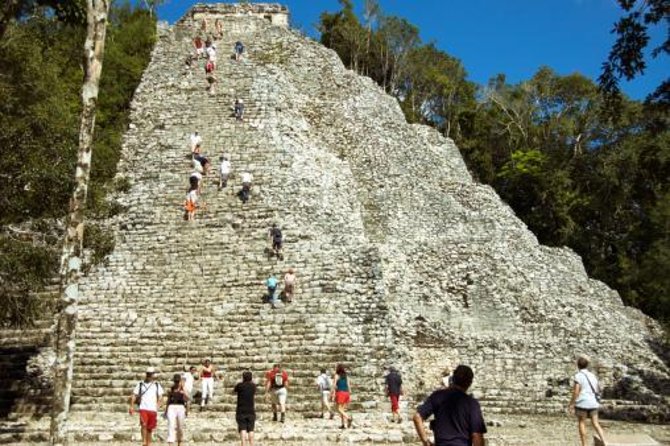
- Cobá’s Nohoch Mul: a 7-level structure about 42 meters tall with roughly 120 steps to the top.
- Sacbé roads explained: the so-called white roads that helped the Maya control trade across the region.
- Cobá temples and ball game areas: including the Church Temple and Oval Temple.
- Cenote Kuxtal swim: 1 hour in a crystal-clear, jungle cenote with an included entry ticket.
- Short group, quick pace: small group size capped at 18 travelers.
- Practical inclusions: lunch, water/light snacks, and umbrellas to smooth out the day.
Cobá Ruins and Nohoch Mul: the Mayan roads you can still feel
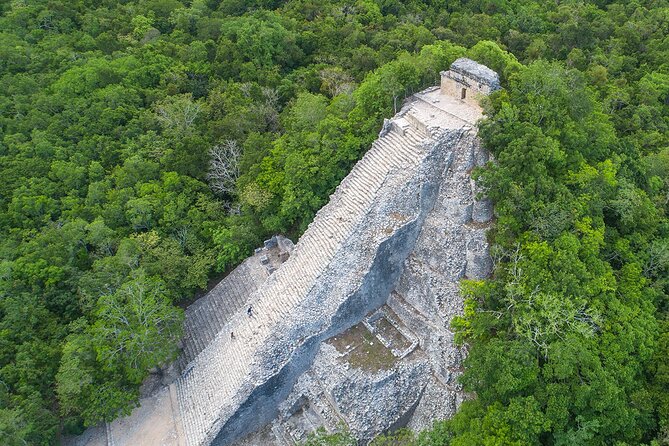
Cobá is the kind of place where you immediately understand why the Maya built a network instead of isolated sites. This tour focuses on that idea through the sacbé roads, the wide stone-paved routes Mayans used for movement and trade. The literal meaning given is “white road,” and the practical effect is control: when you can move people and goods reliably, you can organize power.
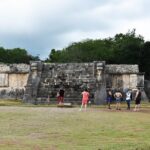
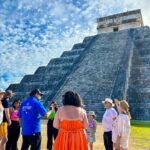
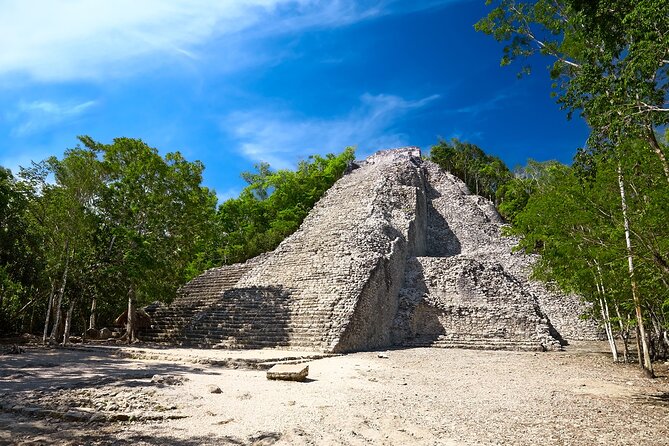
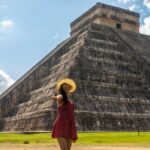
At the heart of Cobá is Nohoch Mul, described as the tallest structure in the archaeological zones north of the Yucatán Peninsula. You’re looking at a 7-level building around 42 meters high, and the information includes that it takes about 120 steps from bottom to top. That alone gives you context for scale. Even if you don’t climb to the top level, you still get a sense of what “major city” meant here.
You can also read our reviews of more tours and experiences in Cancun
What you see in the main site
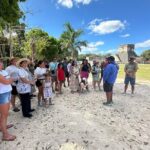
You’ll spend about 2 hours at the Zona Arqueologica de Cobá, guided by certified bilingual staff. Expect stops that include:
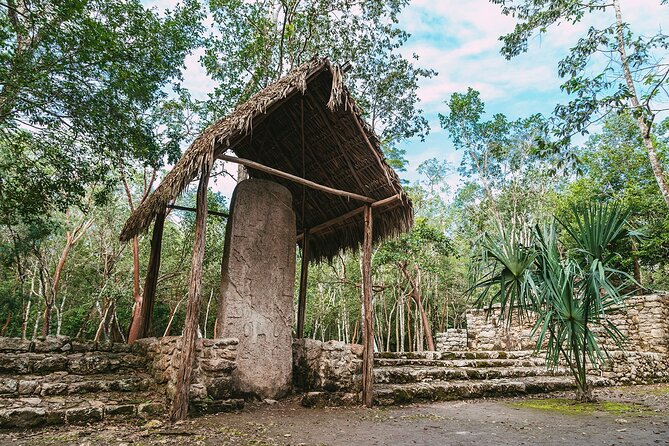
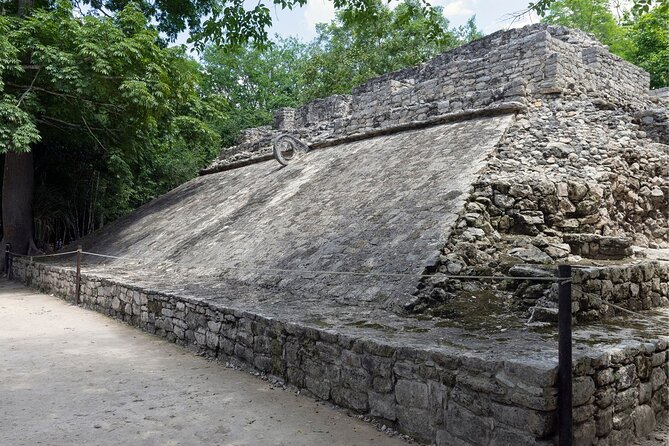
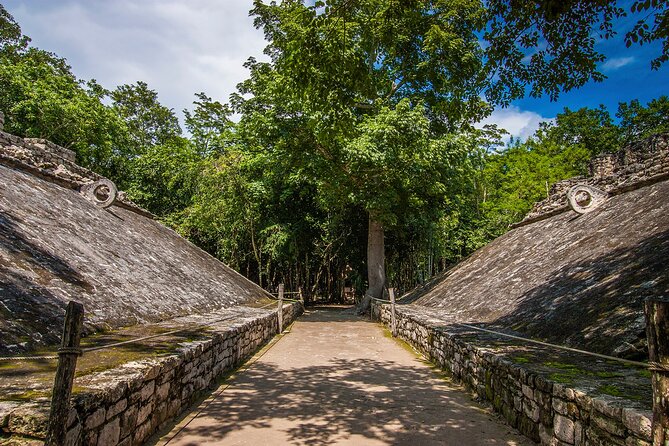
- The Church Temple and the Oval Temple
- Areas connected with two ball games
- Stone carvings that mark important events, along with references to astronomical findings
- An emphasis on the Mayan calendar and how it connects to what you see carved in stone
The carvings matter because they’re not decoration. They’re records. The tour framing ties those stones to timekeeping and the kind of astronomy the Maya used to interpret seasons, cycles, and ritual planning. If you’ve ever wondered why Mayan ruins feel so “organized,” this is the reason. You can see it in how the structures and carvings point back to a system, not randomness.
The practical side: walking and steps
Cobá is outdoors, with uneven ground and real climbing options. The tour says moderate physical fitness is the expectation, and it also notes it’s not for limited mobility. So if you’re unsure, don’t treat this as a casual stroll. Wear shoes you trust. Bring water habits you already follow.
Cenote Kuxtal: your 1-hour swim stop in the jungle
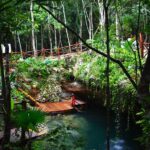
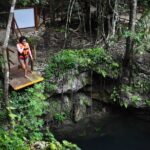
After Cobá’s ruins, the day shifts gears in the best way: Cenote Kuxtal is a refreshing break. You get about 1 hour here, and the tour includes the cenote entry ticket. The setting is described as a cenote surrounded by lush jungle, with crystal-clear water.
This stop is more than a photo break. The tour’s angle is that the water was revered by ancient Mayans, so the swim connects back to the theme of sacred places. Even if you only have a short time in the water, it gives you a contrast you won’t get at a purely archaeological visit: stone city, then living water.
What to bring and how to plan your swim
The tour includes water, light snacks, and umbrellas. That helps a lot, since weather and sun in the region can change fast. Still, you should think like this is a swim stop:
- You’ll want swimwear ready under your clothes
- You’ll likely want something to protect your hands/feet from rough surfaces as you move around
- If you’re sensitive to cold, note that cenote temperatures can feel cooler than you expect (the data doesn’t specify temperature)
The guidance includes that umbrellas are provided, so you’re not totally stuck if you get a short shower.

Lunch that keeps the tour from turning into a rush
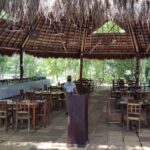
For a 3-hour tour, one of the smartest inclusions is the typical Mexican lunch. This matters because ruins-and-cenote days often forget the boring stuff: you get hungry, then you spend time searching for food. Here, lunch is part of the package, eaten at a local restaurant.
I like this approach for practical reasons. You’re not deciding between paying extra for food or losing time. Instead, you can focus on the experience while the day stays compact.
What you should expect is a typical meal in a local setting, not a fancy show. The tour doesn’t promise a specific menu, but it does promise that lunch is included in the tour price, which is where the value comes from.
Guides, group size, and why it feels more personal than big tours
This experience caps at a maximum of 18 travelers. That number doesn’t sound dramatic, but on-site it changes the vibe. With a smaller group, you spend more time understanding what you’re looking at and less time waiting for someone else’s pace.
You’ll also have certified bilingual guides, and the review notes give you a sense of the guide style. One guide name that stands out is Lalo, described as funny and very knowledgeable, with a knack for adjusting the experience to the group’s walking and riding comfort level. Even without naming every guide, the pattern here is clear: the tour isn’t rigid.
English and the content depth
The tour is offered in English, which is huge for making sense of Mayan calendar ideas, stone carvings, and why certain temples and ball game areas are positioned the way they are. If you like explanations that connect facts to what you see in front of you, this format tends to work well.
Price and value: what you’re really paying for at $159
At $159.00 per person for about 3 hours, the headline price isn’t the whole story. The value comes from how much is bundled:
- Round-trip transportation from most hotels in Cancun (Saturday only)
- Round-trip transportation from most hotels in Riviera Maya (Tuesday or Saturday)
- Admission to Cobá
- Admission to Cenote Kuxtal
- A typical Mexican lunch
- Certified bilingual guide time
- Water and light snacks
- Umbrellas
For many tours in this region, you can quickly pay extra once you add admission tickets, food, and transport. Here, the package approach is the point. You’re paying for a tight day where you don’t spend your time budgeting and negotiating.
Who gets the best deal
You’ll feel the best value if:
- You want a compact hit of Mayan culture without a full-day commitment
- You’re staying in Cancun or Riviera Maya and want pickup to do the heavy lifting
- You care about guided context at both Cobá and the cenote
If you’re the type who only wants to chill at a cenote and doesn’t care about ruins, you might feel the ruins segment is more than you need.
Timing and pickup: 9:00 start does not mean 9:00 pickup
The tour has a start time of 9:00 am, but the pickup time depends on where your hotel is. The important line to remember is this: start time is not pickup time. If you plan breakfast, sunscreen, and getting ready, don’t wait until 9:00 to head to the lobby.
The tour also runs on specific days depending on your area:
- Cancun pickup: Saturday only
- Riviera Maya pickup: Tuesday and Saturday
So if you’re traveling midweek, your day choices may narrow fast. Build your schedule around that, not around wishful thinking.
Camera rules and the small-print that can cost you
This tour includes details that affect your day if you’re bringing gadgets. At the Cobá ruins, there are fees for GoPro devices, tablets, and selfie sticks, payable directly at the box office. On the opposite end, professional photography equipment and drones are strictly prohibited.
My practical advice: if you’re unsure whether your camera setup counts as professional gear, assume it might. Keep it simple and enjoy the day without fighting the rules on-site.
Who should book this Coba & Cenote tour, and who should skip it
This works best for:
- People who want a guided blend of ruins + cenote swim in about 3 hours
- Travelers who like learning how Mayan timekeeping connects to carvings and astronomy
- Groups that appreciate a smaller maximum group size (18 travelers)
It’s not the right fit if:
- You have limited mobility or you can’t handle walking and steps
- You want a purely relaxing swim day with minimal walking
- You hate structured tours with fixed stops (this has set stops: Cobá, then Cenote Kuxtal)
Physical fitness reality check
The tour states moderate physical fitness is needed. Cobá’s 120-step climb option is part of the appeal, but even the walking between areas adds up. Plan your body for a morning of movement.
Should you book? My take on booking this for your Yucatán plan
If you’re in Cancun or Riviera Maya and you want a Mayan-focused day that doesn’t steal your whole day, I think this is a solid choice. The biggest strength is balance: you get Cobá’s cultural learning and scale, then you get a cenote swim at Cenote Kuxtal, and you do it all with lunch and key admissions included.
Book it if you want structure, guide explanations, and practical bundling. Skip it if you need wheelchair-friendly access or you’re trying to avoid anything that feels like a walking-and-steps morning. Also, check your travel day first because pickup depends on whether it’s Saturday (Cancun) or Tuesday/Saturday (Riviera Maya).
FAQ
What is the duration of the Coba & Mayan Cenote tour?
The tour is listed as approximately 3 hours.
What time does the tour start?
The start time is 9:00 am. Your pickup time will depend on where your hotel is located.
Where is pickup available?
Round-trip transportation is included from most hotels in Cancun on Saturday only. From Riviera Maya, it is included on Tuesday and Saturday.
How many travelers are in the group?
The tour has a maximum of 18 travelers.
Is lunch included?
Yes. A typical lunch at a local restaurant is included.
Are the entrance tickets included?
Yes. Entrance to Coba and entrance to the cenote (Cenote Kuxtal) are included.
What fitness level is needed?
The tour calls for moderate physical fitness. It is not recommended for people with limited mobility.
What is the minimum age?
The minimum age is 6 years old.
Are cameras and devices allowed?
GoPro devices, tablets, and selfie sticks are subject to fees payable at the box office in the Coba Ruins. Professional photography equipment and drones are strictly prohibited.
Is there free cancellation?
Yes. You can cancel for a full refund up to 24 hours in advance of the experience start time, and cancellation is free.
What language is the tour offered in?
The tour is offered in English, with certified bilingual guides.