REVIEW · CANCUN
Tasty Mexican Cooking Class with Feast in Riviera Maya
Book on Viator →Operated by Mexico lindo cooking · Bookable on Viator
If you like food with stories, this class hits. Set at Mexico Lindo Cooking outside Cancun, it’s a hands-on cooking lesson in a Mayan jungle setting, followed by a full fiesta-style feast. You learn why traditional Mexican cuisine matters (it was recognized by UNESCO in 2010), while you actually chop, blend, and cook.
Two things I really like: you get a pro-led class in a small group (up to 8), and you leave with recipes you’ll be able to recreate at home. One thing to plan around: the venue is not in Cancun proper, so transport is the big decision unless you add the optional round-trip service.
The rest of the day flows like a family meal. You tour the organic garden for herbs and chiles, cook a multi-course menu, then sit down together with drinks, tequila, and music to finish strong.
In This Review
- Key Points You’ll Care About
- Cooking in the Mayan Jungle Outside Cancun: The Real Hook
- Getting to Mexico Lindo Cooking (Puerto Morelos) and Timing Your Day
- UNESCO-Recognized Mexican Cuisine: What You’re Really Learning
- The 6-Course Menu: What You’ll Make (and Why It Works)
- Organic Garden Walk: Herbs and Chiles You’ll Actually Use Again
- Hands-On Cooking Methods: Clay Pots, Fires, and Real Technique
- The Fiesta Feast: Tequila, Music, and a Table Full of Your Work
- Price and Value: Is $161.30 a Smart Buy?
- Food Allergies, Dietary Needs, and How to Communicate
- Who Should Book This Class (and Who Might Not)
- Should You Book Mexico Lindo Cooking? My Bottom Line
- FAQ
- How long is the Mexican cooking class?
- Is round-trip transportation included?
- What’s the group size?
- Does the class include food and drinks?
- Do they offer vegetarian or vegan options?
- What dishes will I cook?
- Is there an age requirement for drinks?
Key Points You’ll Care About
- Up to 8 people means real instruction, not a cooking demo you watch from a distance.
- Organic garden stop for herbs and chiles you’ll recognize once you’re back home.
- 6 courses + feast with drinks, tequila, and music, plus recipes and an apron to take away.
- Weekday menu variety: the dishes shown rotate by day (so check what day you’ll go).
- No round-trip transport included, with optional transit costing extra and possibly more if you’re far from Playa del Carmen.
Cooking in the Mayan Jungle Outside Cancun: The Real Hook
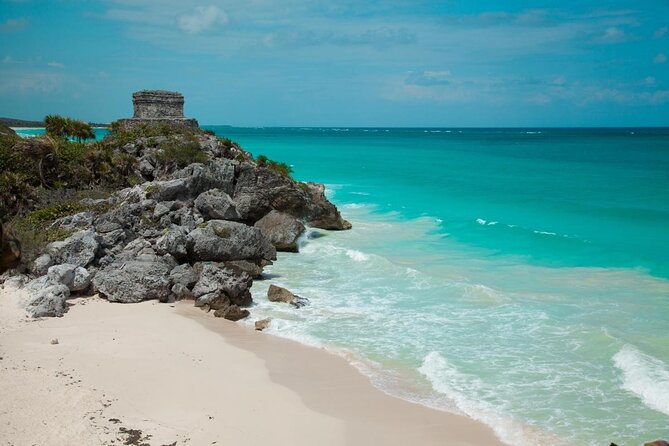
This is not the typical “stand in line, take a photo, eat something average” excursion. The setting matters: you’re in a private cooking school in the Mayan jungle area near Puerto Morelos, so the whole experience feels calmer and more connected to place.
You’ll also feel the difference between a hotel dining experience and a cooking class. Here, you’re learning the building blocks of flavor—how Mexican dishes layer taste, balance acidity and richness, and use chiles and herbs that don’t show up on the average all-inclusive menu.
And because it’s small-group, you get room to ask why. I like that the class doesn’t treat cooking as magic. It’s taught as technique plus ingredients plus timing.
You can also read our reviews of more cooking classes in Cancun
Getting to Mexico Lindo Cooking (Puerto Morelos) and Timing Your Day
The meeting point is at Mexico Lindo Cooking on Carretera Ruta de los Cenotes Km. 6.2, 77580 Puerto Morelos, Q.R., Mexico. The start time listed is 10:30 am, and the duration is about 6 hours.
Here’s the practical catch: round-trip transportation is not included by default. Optional round-trip service is offered for an extra $85 USD round trip, but hotels farther than Playa del Carmen could have a surcharge from the transportation company.
A few reviews also point out the same reality: the location can be far enough that you should arrange transport carefully. If you’re staying in Cancun or farther out, budget extra time (and don’t assume you’ll be back in time for dinner plans without checking the pickup/drop-off). If you have your own car, that can simplify things, but not everyone wants to drive.
My advice: when in doubt, plan it as a half-day to full-day commitment.
UNESCO-Recognized Mexican Cuisine: What You’re Really Learning
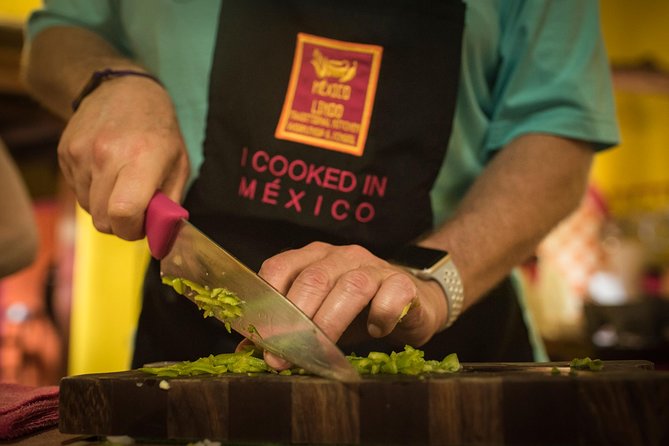
Mexican cuisine isn’t just a collection of recipes—it’s cultural knowledge. The experience is anchored in traditional cooking, and it connects to the fact that traditional Mexican cuisine was recognized by UNESCO in 2010 as an Intangible Cultural Heritage.
In a class like this, that UNESCO note isn’t just trivia on a brochure. It usually shows up as context while you cook: where flavors come from, why certain ingredients matter regionally, and how techniques reflect local ingredients and cooking methods.
You’ll also notice the emphasis on authenticity. That comes through in the menu choices (Yucatán-style dishes appear often) and the way ingredients are handled—especially things like chiles, herbs, and tortillas, which are core to many dishes.
The 6-Course Menu: What You’ll Make (and Why It Works)
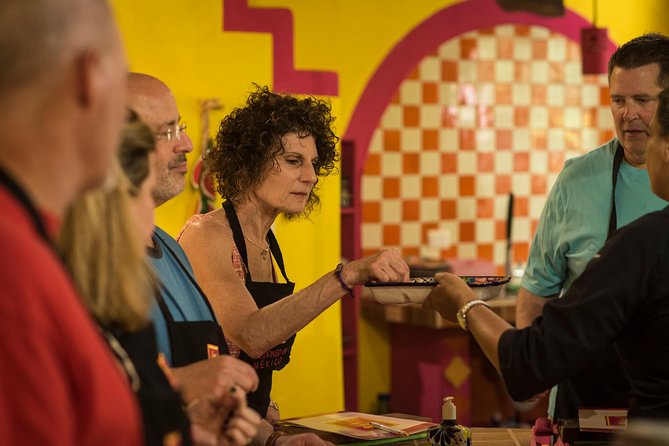
This class is built around 6 courses, then a fiesta meal to finish. You’ll learn and prepare a full menu, not just one or two highlights.
The menu rotates by weekday. Based on the schedule provided, here’s what you may see depending on the day you book:
Monday
- Starter: Sopa de Lima (lemon soup)
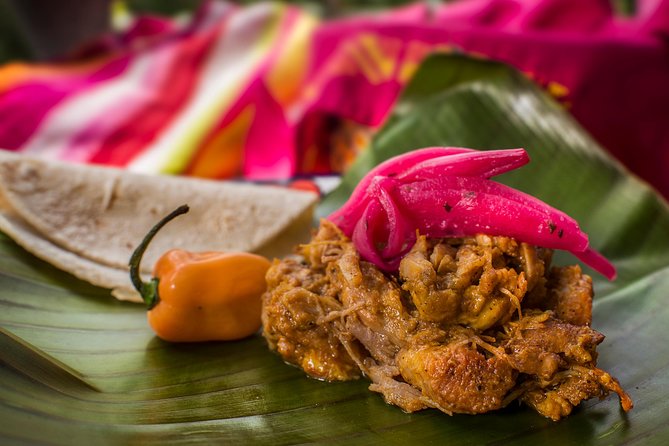
- Main: Cochinita Pibil (pork in pibil sauce)
Tuesday
- Starter: Ensalada de Nopalitos (cactus salad)
- Main: Carnitas (pork confit)
Wednesday
- Starter: Flan de Coco (coconut flan)
- Main: Arroz Verde a la Veracruzana (Veracruz style green rice)
Thursday
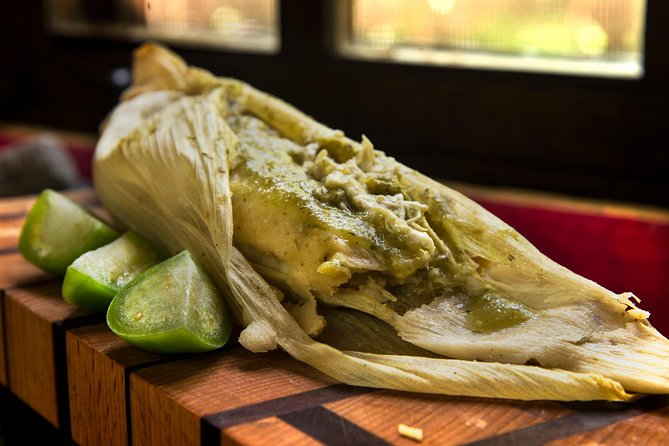
- Main: Tamales Verdes (green sauce tamales)
- Main: Salpicon de Res (beef salad)
Friday
- Main: Quesadillas de Champiñones y Papa con Chorizo (mushrooms, potato, chorizo)
- Dessert: Flan Napolitano
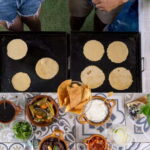
A few reviews also mention tortilla-making from scratch and cooking in clay dishes, which fits the overall feel of a class focused on technique, not shortcuts. Even if you already know Mexican food, this kind of menu gives you range: bright starters, sauced mains, rich desserts, and recipes that use herbs and chiles you’ll want to keep using.
If you love food variety, the weekday rotation is a win. You can pick a day that lines up with your favorite dishes.
Organic Garden Walk: Herbs and Chiles You’ll Actually Use Again
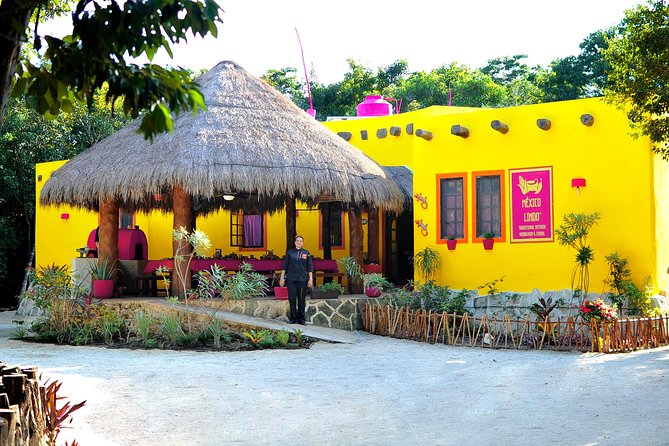
One of my favorite parts of this type of cooking class is the ingredient education. Here, you visit an organic garden to learn about herbs and chiles used in Mexican cooking.
This isn’t just a photo stop. You’re being shown what goes into the dishes, and you get the chance to connect plants to flavor. That matters at home. Once you know what ingredient is doing what job, you can swap confidently when a grocery store doesn’t stock the exact same chile.
What to do with this info:
- Taste with your nose. Chiles and herbs can smell grassy, smoky, citrusy, or earthy depending on how they’re used.
- Take mental notes on bitterness and heat level. Even without measuring, you’ll learn the direction the flavor is meant to go.
- Remember that many Mexican dishes are built around balance—acid, salt, fat, and spice show up together, not separately.
You can also read our reviews of more tours and experiences in Cancun


Hands-On Cooking Methods: Clay Pots, Fires, and Real Technique
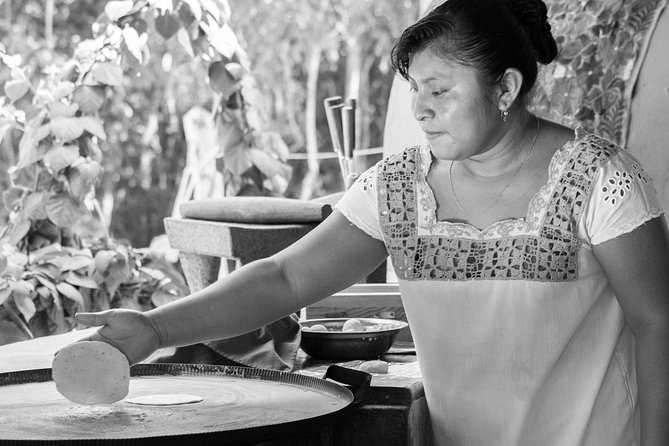
You cook using a kitchen setup that feels traditional. Reviews mention clay dishes, cooking mostly over open fires, and also using propane burners and an oven. That mix is practical: you get the flavor of traditional methods plus the control of modern heat sources.
What you’re likely to learn (and what you should pay attention to):
- Knife skills and prep timing: Mexican cooking often moves fast once you start combining ingredients.
- How sauces get built: you’ll see how heat, fat, and spices transform into something you can’t replace with just store-bought flavor.
- Tortillas and dough basics, when tortilla-making is part of the class for your session (taught hands-on).
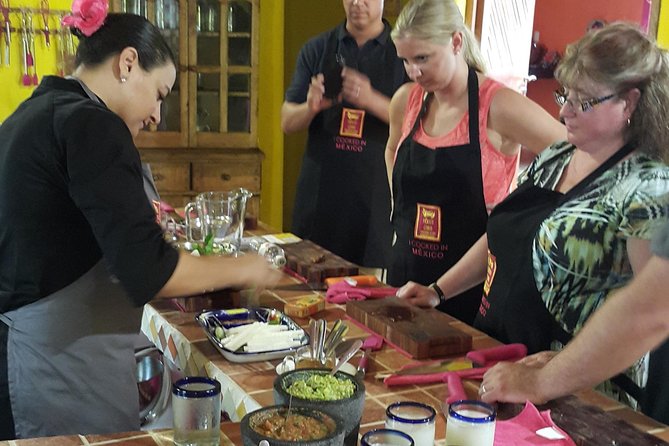
Because the class is small (max 8), you get more hands-on time and less waiting around. That’s also why the chef’s approach matters. In reviews, you’ll see different chefs and instructors lead classes—Alejandra and Alejandro, Chris, Thomas, Claudia, and Alexandra appear as names. The consistent theme is the same: they teach, correct you, and bring context while you cook.
Wear comfortable shoes. The garden involves walking, and you’ll be standing and working for much of the session.
The Fiesta Feast: Tequila, Music, and a Table Full of Your Work
After the cooking, you sit down to celebrate. This is where the class turns into a real meal: a traditional Mexican fiesta with drinks, tequila, and music.
That ending matters more than it seems. When you cook the food yourself, your brain pays attention to what changed from raw to finished. You taste with memory: the herbs you picked up, the chiles you learned about, the heat you adjusted.
Also, because you’re eating what you prepared, portion sizes and variety make sense. It’s not one dish and a side. It’s a full feast with multiple courses, so the meal feels complete.
Practical note: the minimum drinking age is 18. If you want to skip alcohol, you can still enjoy the food and the fiesta atmosphere.
Price and Value: Is $161.30 a Smart Buy?
At $161.30 per person, you’re paying for a lot that many food experiences don’t include. Your ticket includes:
- the cooking class
- snacks
- a gourmet 6-course authentic Mexican meal
- all drinks and the recipes for what you prepare
- an apron
- a professional guide and tour escort/host
The big thing not included: transportation to the venue. Round-trip transit can be added for $85 USD round trip, with possible surcharges if you’re farther out than Playa del Carmen.
So here’s how I’d evaluate value:
- If you add transport, you’ll be closer to a “full excursion” price, but you’re still getting a real meal you cooked plus alcohol/tequila and recipe materials.
- If you’re already renting a car (or you’re nearby), the base price becomes much easier to justify because you avoid the extra transit cost.
- The small-group cap helps justify the price. When a class keeps attention focused, you tend to learn more, waste less time, and get better instruction.
Also, the recipe book you receive is a legit add-on. It turns the trip into something you use after you get home.
Food Allergies, Dietary Needs, and How to Communicate
Good news: dietary requests are supported. The experience states they will happily assist with dietary restrictions and can provide vegan or vegetarian options. Just let them know before arrival, and advise any allergies at booking.
This is one of those places where you should be specific. Don’t just say vegetarian—tell them what you can eat and what you need to avoid. Also mention any allergy triggers, even if you think they’re obvious. Kitchens can adapt, but you’ll get the safest results when you clearly communicate up front.
If you’re bringing dietary needs into the decision: this class is designed to work with different eating styles, not just one standard menu.
Who Should Book This Class (and Who Might Not)
This experience is best for you if:
- You love cooking and want hands-on time, not a passive demo
- You want real Mexican dishes beyond what you see at a resort
- You value taking home recipes you can repeat
- You like a smaller group format (up to 8)
You might consider a different option if:
- You don’t want to manage transportation or don’t want extra costs for round-trip transit
- Your schedule is tight and you can’t flex if the day runs long
- You’re looking for a quick two-hour activity (this is built as a multi-course class day)
If you’re traveling with friends or family, this setup can be great. People tend to leave talking about the food they cooked and the technique they learned.
Should You Book Mexico Lindo Cooking? My Bottom Line
Book it if your goal is simple: learn authentic Mexican cooking skills in a real setting, then eat a full feast that you made yourself. The combination of small-group instruction, garden-based ingredient education, and a menu built around multiple courses makes the price feel more like a full culinary day than a simple ticketed meal.
The only real caution is logistics. Because round-trip transport costs extra and hotels farther out may pay more, you’ll get the best value when you either plan your transit well or you’re staying relatively close to where pickup makes sense.
If you’re the type who thinks a cooking class should be hands-on and ingredient-focused, this one is an easy yes.
FAQ
How long is the Mexican cooking class?
It runs for about 6 hours (approx.), starting at 10:30 am.
Is round-trip transportation included?
No. Round-trip transit is available as an extra cost (from $85 USD round trip), and hotels farther than Playa del Carmen may have a surcharge.
What’s the group size?
It’s limited to a maximum of 8 travelers.
Does the class include food and drinks?
Yes. You’ll cook a gourmet 6-course meal, and the experience includes snacks and all drinks. There’s also tequila as part of the fiesta.
Do they offer vegetarian or vegan options?
Vegetarian options are available, and the experience states they can accommodate vegan/vegetarian options if you let them know before arrival. You should also advise allergies or dietary restrictions at booking.
What dishes will I cook?
The menu rotates by weekday. A sample schedule is provided for Monday through Friday, including dishes like Sopa de Lima, Cochinita Pibil, Ensalada de Nopalitos, Carnitas, Tamales Verdes, Salpicon de Res, and flan varieties.
Is there an age requirement for drinks?
Yes. The minimum drinking age is 18.