REVIEW · CANCUN
Scuba Diving (1st time) in Cancun Beginner’s WELCOMED!
Book on Viator →Operated by Aquafueled Adventures Tours · Bookable on Viator
Cancun’s underwater art and reefs feel unreal. This first-time scuba session combines two high-impact places—MUSA’s underwater statue museum and the MesoAmerican Reef—with step-by-step coaching designed for total beginners.
What I like most is the calm, safety-first atmosphere and the way you’re taught at your pace. Instructors such as Lars (and others like Charles or Santiago) focus on clear instructions, patience for anxious students, and real skill-building before you spend time underwater. One consideration: you must swim, you’ll fill out a PADI health questionnaire on-site (answering NO to each question), and there are mandatory on-site charges plus optional rentals.
In This Review
- Quick Picks Before You Commit
- Why MUSA + the MesoAmerican Reef Work So Well for Beginners
- Timing, Meet-Up, and What the Day Feels Like
- The Training Phase: How You Gain Confidence Fast
- Costs and Fees: What You Pay On Site (and Why It’s Worth Planning)
- Stop 1 at MUSA: Underwater Statues, Easy Wonder, Good Learning Terrain
- Stop 2 at the MesoAmerican Reef: Wildlife Time and a Change of Pace
- Safety and the PADI Health Questionnaire: The Non-Negotiables
- Packing Tips and First-Timer Game Plan
- The Instructor Factor: Why Lars, Charles, and Santiago Get Noticed
- Who Should Book This (and Who Might Prefer Another Option)
- Should You Book It? My Honest Take
- FAQ
- Do I need a scuba license to take this tour?
- How long is the scuba experience?
- What time does it start, and where do we meet?
- Is knowing how to swim required?
- What fees are not included in the price?
- Is scuba equipment included?
- Are wetsuits or underwater photos available as add-ons?
- How many people are in the group?
- What do I need to do on-site for health requirements?
- What if weather is bad or I need to cancel?
Quick Picks Before You Commit
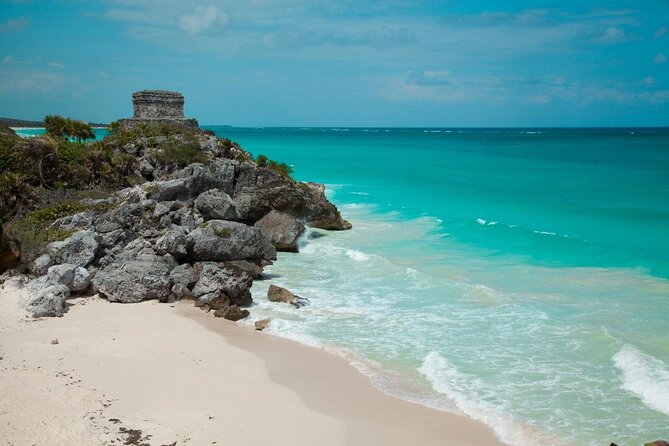
- Two major sites in one outing: MUSA statues, then the MesoAmerican Reef in the National Park
- Built for brand-new people: no license required, and you’ll get taught before going in-water
- Small group size: capped at 4 travelers for more hands-on attention
- Instructor coaching that protects confidence: patient step-by-step guidance (including help with ear equalizing)
- Budget for on-site fees: $50 dock and ecological taxes per person (cash), plus optional $50 gear rental
Why MUSA + the MesoAmerican Reef Work So Well for Beginners
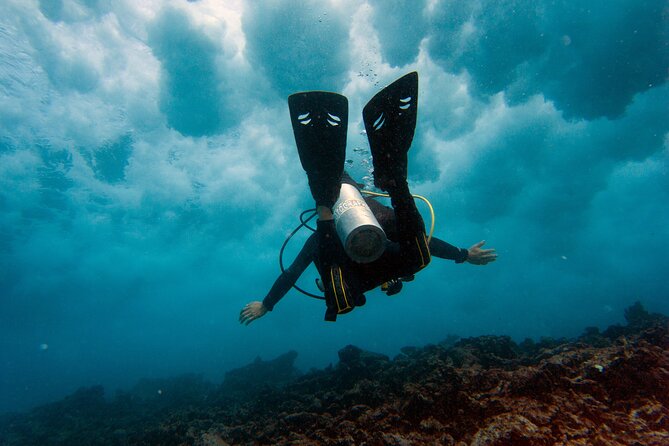
This tour is smart because it doesn’t make your first day about “surviving.” It puts you in two visually rewarding places where you can learn, relax, and still feel like you’re doing something seriously special.
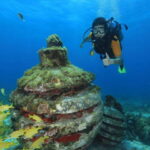
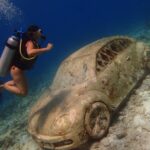
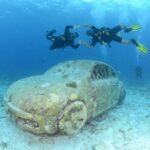
MUSA is famous for its underwater statues. Even if you’ve never done scuba before, seeing human-scale figures and art sitting in the water helps your brain switch from nervous to curious. You also tend to focus on one simple goal: stay calm, breathe steadily, and look around.
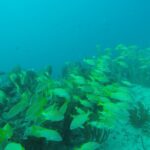
Then you move to the MesoAmerican Reef, located inside the National Park in the bay of Cancun. The reef area is the kind of place where wildlife spotting keeps you busy—in a good way—so you’re not stuck thinking about your gear.
You can also read our reviews of more scuba diving tours in Cancun
Timing, Meet-Up, and What the Day Feels Like
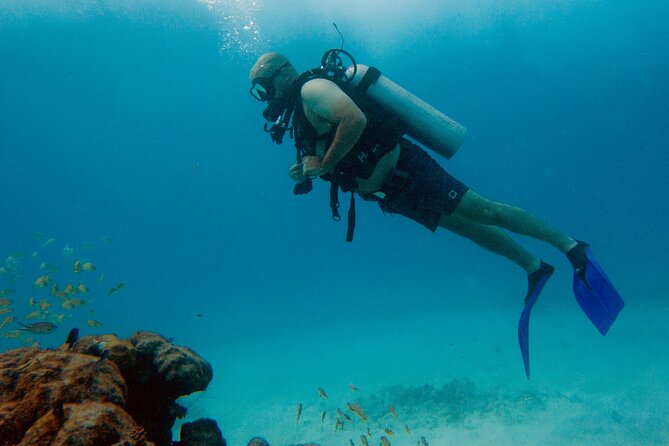
The activity runs about 5 hours 30 minutes, starting at 10:00 am at Aquafun Marina on Blvd Kukulcan (Zona Hotelera). You’ll return to the meeting point at the end.
That timing matters for first-timers. You’re not rushing from skill practice straight into a long session underwater. The day is structured to fit two underwater sessions of about 35–45 minutes each, with training and setup in between.
Also, this isn’t a huge cattle-car operation. The tour caps at 4 travelers, which usually means less waiting around and faster help if something feels off.
The Training Phase: How You Gain Confidence Fast
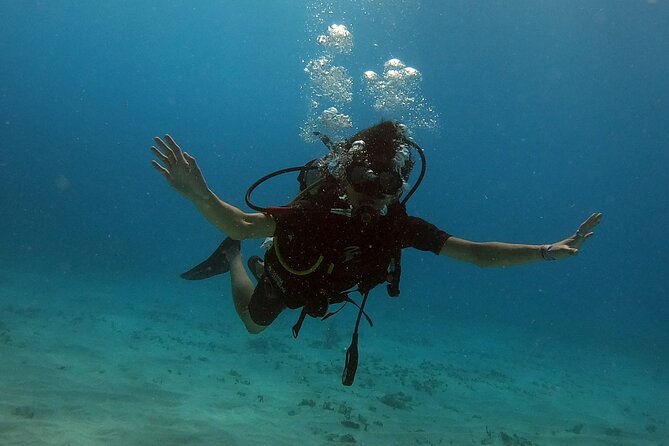
The best part of any first scuba experience is how the basics are taught. Here, you should expect a “learn it first” approach, not just a quick gear handoff.
From real first-time experiences shared by the same program, many students start with the basics in a pool. That gives you time to understand how breathing through the regulator feels, how to handle your mask, and how buoyancy works (the water does a lot of the work if you let it).
Then, once you’re on the boat and heading out, you’re guided through what to do in the moment. One common challenge for newcomers is ear equalizing. You’ll be reminded to equalize your ears throughout, and instructors often give you hands-on coaching until it feels natural. If you’ve ever had pressure in your ears on a plane, you already know why this skill matters.
If you’re nervous about water in your nose: it can feel scary at first, but it’s often just a sensation your body interprets under pressure. The key is learning to keep breathing controlled and trusting the equipment fit. With scuba gear, you typically don’t deal with the same problems as snorkel sessions where water can get into your goggles and mouth.
Costs and Fees: What You Pay On Site (and Why It’s Worth Planning)
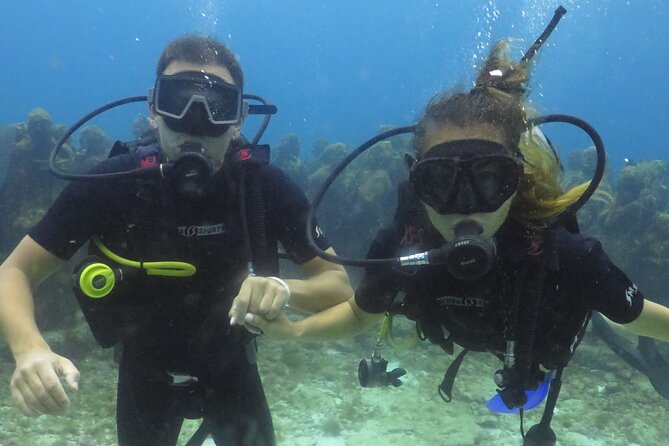
This is where you’ll want to be organized, because not all costs are baked into the booking.
Mandatory on-site fee (cash):
- $50 per person for Dock & Ecological taxes
Optional on-site fee:
- $50 per person for scuba equipment rental, if you need it
There are also optional add-ons on-site, such as wetsuit rental and an underwater photo and video package. The exact prices for these add-ons aren’t listed in your details, so you’ll want to confirm on-site if you’re budgeting for them.
Is it “expensive”? It can be, but it’s also a good value for two reasons:
- You’re getting two separate underwater sessions in different areas.
- You’re paying for PADI-certified instruction and close guidance in a small group.
If you already own good scuba gear, the equipment rental fee might be avoidable. If you don’t, budget for it so the day stays stress-free.
Stop 1 at MUSA: Underwater Statues, Easy Wonder, Good Learning Terrain
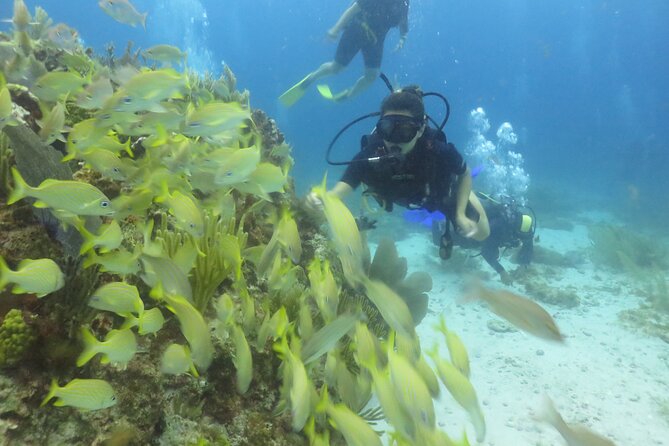
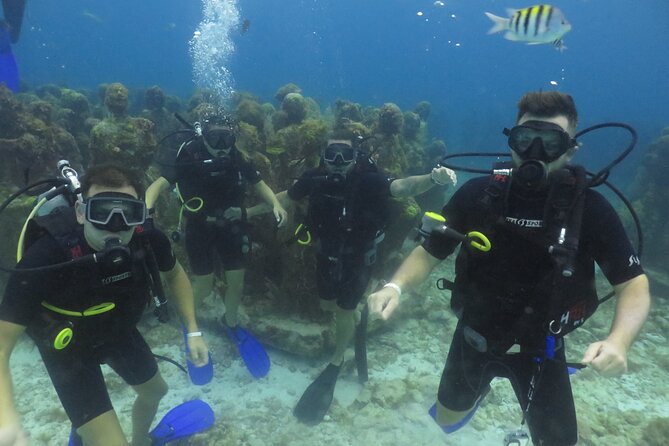
Your first underwater stop is Museo Subacuatico de Arte (MUSA). This is the kind of place where first-timers do well because the visuals give you something to do besides focus on anxiety.
Expect to see the statues up close while you practice staying comfortable with your breathing and body position. The time here is about 35–45 minutes, so it’s long enough to get oriented and enjoy the art, but not so long that you burn out.
One practical tip from first-timer patterns: try to slow down your movements. If you move too fast at the start, you can feel tired sooner and worry more. The best approach is simple—look, breathe, and let your gear do its job.
Also, if you’re sensitive to pressure or ear discomfort, this is the moment to focus on equalizing early and regularly. Instructors in this program are known for coaching through discomfort rather than pushing you through it, which matters a lot on a first day.

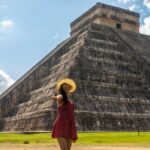


Stop 2 at the MesoAmerican Reef: Wildlife Time and a Change of Pace
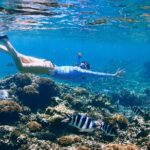
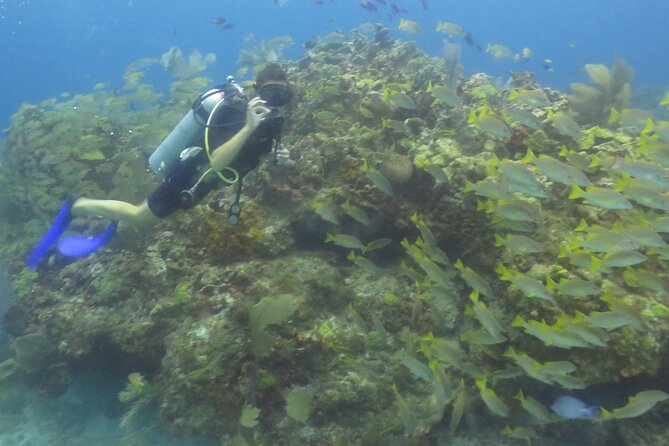
Your second session goes to the MesoAmerican Reef inside the National Park. This is where the experience often becomes more about wildlife and less about studying the scenery.
You’ll have about 35–45 minutes here as well. Reef environments can be visually busy, which helps beginners stay mentally occupied in a positive way. You spend less time checking your equipment and more time scanning for fish and other marine life.
This stop also tends to feel different because you’re not just looking at statues. You’re experiencing a living habitat, which can feel humbling in the best way.
If you get tired or anxious during the second session, instructors can adjust how long you stay down. That flexibility is a big deal for first-timers, especially if equalizing pressure has been tiring.
Safety and the PADI Health Questionnaire: The Non-Negotiables
This experience is positioned as safe and beginner-friendly, and the instructors are PADI-certified. But the tour includes rules you have to respect.
You must:
- Know how to swim
- Fill out a PADI Health questionnaire on-site and answer NO to each question in order to participate
- Follow the instructions from your instructor without arguing with your gear or your ears
The “no exception” part matters. It’s better to be turned away before you get in the water than to risk your health. Also, if you have any medical concerns, it’s worth checking first so you don’t end up spending time that day only to be unable to participate.
Packing Tips and First-Timer Game Plan
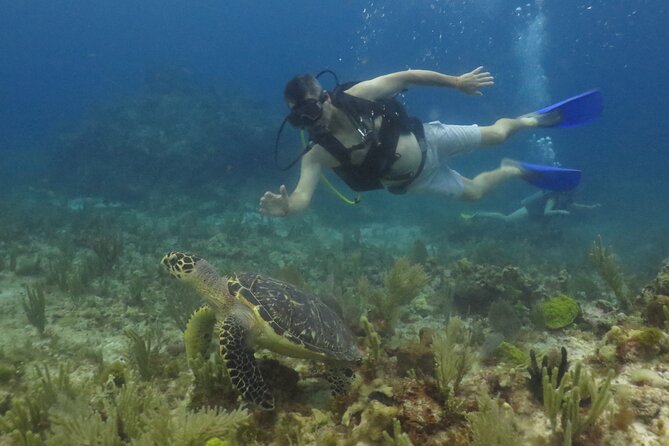
Because this is in open water, you’ll want to treat the day like a mini outdoor adventure, not a casual stroll.
Here’s what helps most first-timers:
- Wear gear that dries fast and is comfortable for time on the boat.
- Plan for motion sickness. More than one participant advice is to prepare for sea sickness and eat in the morning.
- Keep your breathing steady and focus on equalizing early. Waiting until you feel pain makes things harder.
- Expect to learn a rhythm: look around, breathe, adjust if needed, then repeat.
Also, bring a calm mindset. The instructors here are used to nervous first-timers, and that’s a huge part of the value. If you fight the process, you’ll feel worse. If you follow the steps, it clicks faster than you expect.
The Instructor Factor: Why Lars, Charles, and Santiago Get Noticed
A lot of scuba confidence comes from how an instructor communicates. The pattern here is clear: patience, clear steps, and constant reassurance.
From real participants, you may be guided by instructors like Lars, Charles, or Santiago. Names change, but the coaching style shows up in a few ways:
- Very clear instructions at the start
- Extra help for students who hesitate once they’re in the ocean
- Adjustments if you’re tiring or struggling with equalizing
- Support that keeps you from feeling alone underwater
One big takeaway: you don’t have to “perform.” Your job is to follow directions, breathe steadily, and keep practicing. Their job is to make sure you’re comfortable enough to enjoy the experience.
Who Should Book This (and Who Might Prefer Another Option)
This tour is a strong match if:
- You want your first scuba experience without a scary learning curve
- You like small groups and personal attention
- You’re curious about MUSA and a reef environment in the same day
- You’re okay meeting safety requirements (especially the swim requirement and health questionnaire)
You might reconsider if:
- You can’t swim confidently
- You have medical conditions that could affect your PADI questionnaire answers
- You’re unwilling to budget for on-site cash fees
If you’re an experienced scuba person, you might find the sessions feel short. But for beginners, short and well-guided is exactly the point.
Should You Book It? My Honest Take
Yes, you should book this if you want a first-time scuba outing that feels structured, safe, and worth the money. Two sites—MUSA plus the MesoAmerican Reef—give you variety, and the small-group limit helps you get real attention instead of fading into a big group.
Just go in with your eyes open about two things: the $50 dock and ecological taxes paid in cash, and the on-site health questionnaire that must be completed with NO answers to participate. If you plan for those, you’re set up for a genuinely confidence-building day.
You’ll likely come away with that rare travel feeling: not just seeing something cool, but learning a skill you’ll remember.
FAQ
Do I need a scuba license to take this tour?
No. The experience is described as beginner-friendly with no license required.
How long is the scuba experience?
It lasts about 5 hours 30 minutes (approx.).
What time does it start, and where do we meet?
It starts at 10:00 am and meets at Aquafun Marina, Blvd Kukulcan Km 16.261, Zona Hotelera, 77500 Cancún, Q.R., Mexico.
Is knowing how to swim required?
Yes. You must know how to swim to participate.
What fees are not included in the price?
You must pay $50 per person in cash on-site for Dock & Ecological taxes. Scuba equipment use costs $50 per person if you need rentals.
Is scuba equipment included?
Equipment use is not included. You can pay an additional $50 per person for rental if needed.
Are wetsuits or underwater photos available as add-ons?
Yes. Wetsuit rental and an underwater photo and video package are listed as optional add-ons.
How many people are in the group?
The tour/activity has a maximum of 4 travelers.
What do I need to do on-site for health requirements?
Each participant must complete a PADI Health questionnaire on-site the day of the activity and answer with NO to each question to participate.
What if weather is bad or I need to cancel?
You can cancel for a full refund up to 24 hours in advance. If the activity is canceled due to poor weather, you’ll be offered a different date or a full refund.